Digital Data silently underpins modern civilization, encoding memories, financial systems, scientific research, and personal identities into physical structures that most people never see or fully understand.
Although digital information feels intangible, it always exists as carefully organized physical states inside machines engineered to preserve accuracy across unimaginable volumes and timescales.
This article explores how data is stored, protected, duplicated, and preserved, revealing the hidden physical realities behind files, photos, messages, and global information systems.
By examining storage technologies historically and technically, the discussion uncovers why reliability, redundancy, and precision define modern data infrastructure.
Real-world examples from science, industry, and global communication demonstrate how storage decisions influence economic stability, privacy, and technological progress.
The following sections analyze data storage through physical media, error control, large-scale systems, and future innovations shaping humanity’s digital memory.
From Physical Matter to Binary Meaning
Every piece of digital information ultimately reduces to physical changes, such as electrical charges, magnetic orientations, or optical states that machines interpret as binary values.
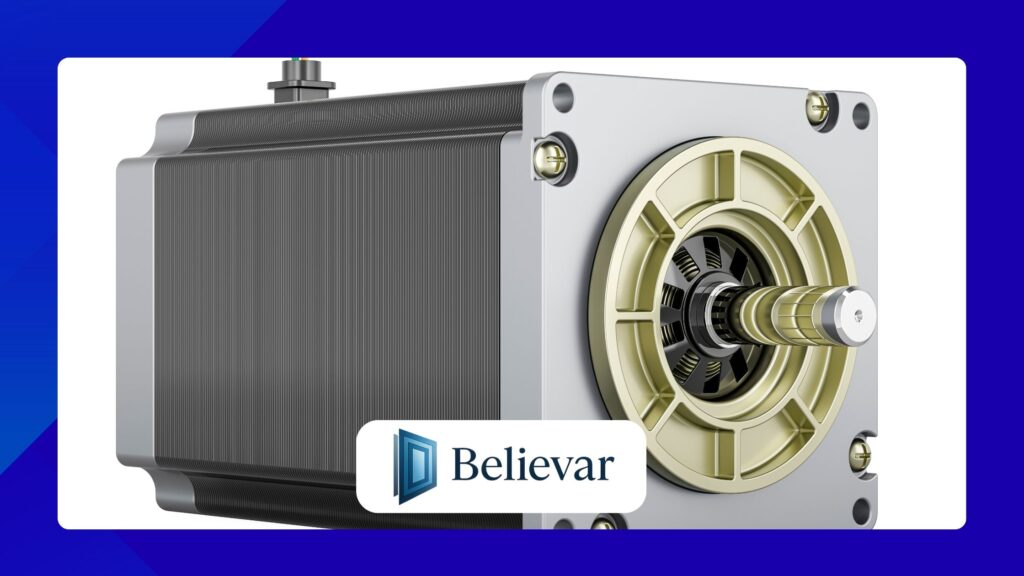
Hard drives store data by magnetizing microscopic regions, where orientation differences represent ones and zeros with astonishing density and long-term stability.
Solid-state drives rely on trapped electrical charges inside floating-gate transistors, preserving data even without power through precisely controlled quantum-scale effects.
This physical dependence means data storage always faces environmental threats, including heat, radiation, and material degradation, despite the abstract language used to describe information.
Understanding this material reality explains why storage engineering prioritizes durability, redundancy, and constant error checking rather than relying on idealized digital perfection.
Error Correction and Data Integrity
Modern storage systems assume errors will occur, designing mathematical safeguards that detect and correct mistakes before users ever notice corruption or loss.
Error-correcting codes add structured redundancy, allowing systems to reconstruct original data even when portions degrade or flip unexpectedly during storage or transmission.
A dramatic example occurred during NASA’s deep-space missions, where data sent across billions of kilometers relied on correction algorithms documented by NASA to recover faint, noisy signals.
These techniques transformed unreliable physical media into dependable digital memory, enabling long-term archives and global communication networks.
Without continuous integrity checks, modern databases, financial systems, and scientific records would collapse under cumulative microscopic errors.
+ Hidden Features on Your Phone You Probably Never Knew About
Massive Data Centers and Redundancy
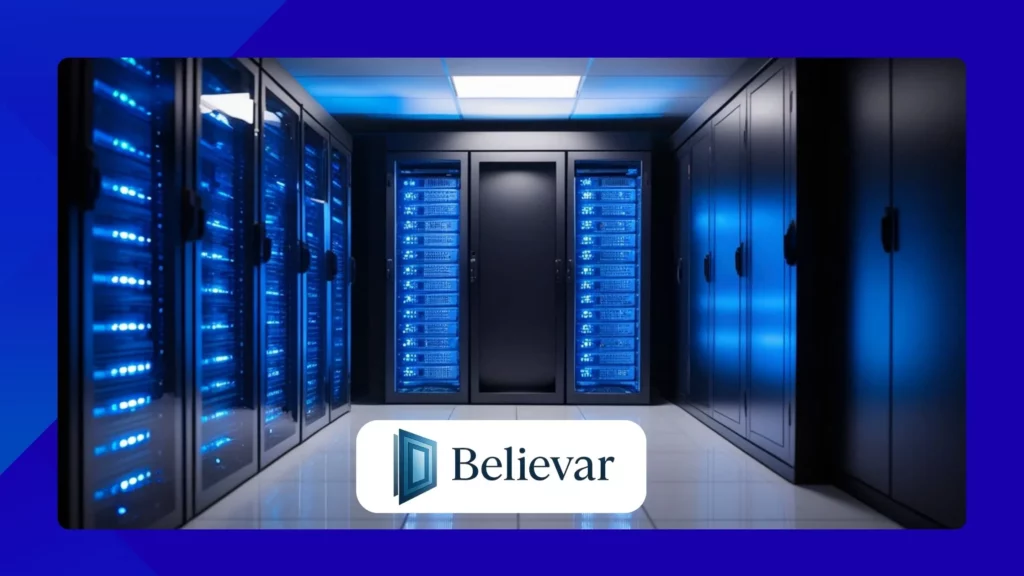
The world’s data increasingly resides inside vast data centers, where thousands of machines cooperate to store, duplicate, and protect information continuously.
These facilities distribute identical data copies across multiple servers, ensuring that hardware failures never erase critical information unexpectedly.
Cloud providers design storage layers that treat hardware as disposable, prioritizing software-managed redundancy over individual device reliability.
Organizations like the National Institute of Standards and Technology describe these principles in detail within their data storage guidelines, shaping global best practices.
This architecture allows modern services to scale effortlessly while maintaining remarkable durability against disasters, outages, and localized failures.
Storage Media Evolution Over Time
Data storage media have evolved rapidly, transitioning from punched cards and magnetic tapes to high-density disks and solid-state memory within a single human lifetime.
Each technological shift increased storage density while reducing physical size, energy consumption, and access latency for increasingly demanding applications.
The table below illustrates how different storage media compare in durability, speed, and typical use cases across historical periods.
| Storage Medium | Durability | Access Speed | Common Use |
|---|---|---|---|
| Magnetic Tape | High | Low | Long-term archives |
| Hard Disk Drive | Moderate | Medium | Personal computers |
| Solid-State Drive | High | Very High | Modern devices |
| Optical Media | Moderate | Low | Distribution backups |
Despite advances, older media persist where longevity and cost efficiency outweigh performance requirements.
Data Preservation and Long-Term Memory
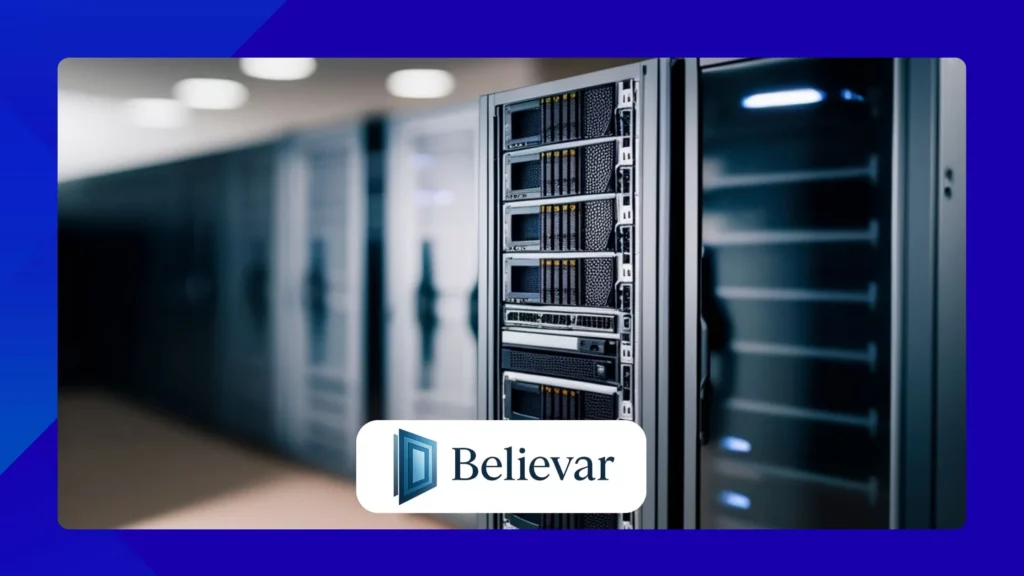
Preserving data for decades or centuries presents unique challenges, as storage media degrade faster than the information they contain remains valuable.
Libraries, governments, and scientific institutions continually migrate data to newer formats to avoid technological obsolescence and physical decay.
The Long Now Foundation’s archival projects illustrate how long-term storage requires cultural commitment, not merely technical solutions.
Preservation strategies emphasize format transparency, redundancy, and documentation to ensure future generations can interpret stored information.
Data longevity ultimately depends as much on human stewardship as on engineering innovation.
+ How Technology Has Changed Consumer Habits in the Last 20 Years
Future Frontiers of Data Storage
Emerging storage technologies push beyond traditional electronics, exploring molecular, atomic, and even biological approaches to information preservation.
DNA storage encodes data into genetic sequences, achieving densities millions of times greater than current media while remaining stable for centuries.
Researchers have successfully stored entire books and images in synthetic DNA, demonstrating feasibility beyond theoretical speculation.
Quantum storage experiments aim to preserve information using entangled states, promising revolutionary performance for future computing systems.
These developments suggest that data storage will continue redefining humanity’s relationship with memory, knowledge, and permanence.
Conclusion
Digital information exists only because physical systems reliably preserve fragile states against constant entropy and environmental disruption.
Understanding data storage reveals the immense engineering effort required to make digital life feel effortless and trustworthy.
From magnetic grains to DNA strands, storage technologies reflect humanity’s evolving desire to remember, record, and transmit meaning.
As data volumes grow, responsible storage design will shape privacy, sustainability, and collective memory for generations.
FAQ
1. How is Digital Data physically stored inside devices?
Digital Data is stored through physical states like magnetic orientation, electrical charge, or optical changes that represent binary values interpreted by hardware systems.
2. Why are errors unavoidable in data storage?
Physical imperfections, environmental interference, and material degradation inevitably introduce errors, requiring continuous detection and correction mechanisms.
3. What makes cloud storage reliable?
Cloud systems rely on redundancy, distributing multiple synchronized copies across independent hardware to prevent data loss from localized failures.
4. Can data last forever on modern storage media?
No storage medium lasts indefinitely, so long-term preservation requires active migration, monitoring, and documentation strategies.
5. Will future storage replace traditional hard drives?
Emerging technologies may complement existing systems, but widespread replacement depends on cost, reliability, and scalability improvements.
6. How does temperature affect Digital Data storage reliability?
High temperatures accelerate material degradation, increase error rates, and shorten device lifespan, which is why professional storage environments maintain strict thermal controls.
7. Why is redundancy more important than storage size?
Redundancy ensures data survival during failures, while raw capacity alone provides no protection against hardware faults, corruption, or accidental deletions.
8. How do data centers prevent simultaneous data loss?
They geographically distribute copies across regions, isolating data from natural disasters, power outages, and localized infrastructure failures.
9. Is Digital Data ever truly deleted from storage devices?
Data often persists until overwritten, which is why secure deletion requires multiple overwriting processes or cryptographic erasure methods.
10. Why is data migration essential for long-term archives?
Migration prevents loss caused by obsolete formats and aging media, ensuring stored information remains readable as technology evolves.